
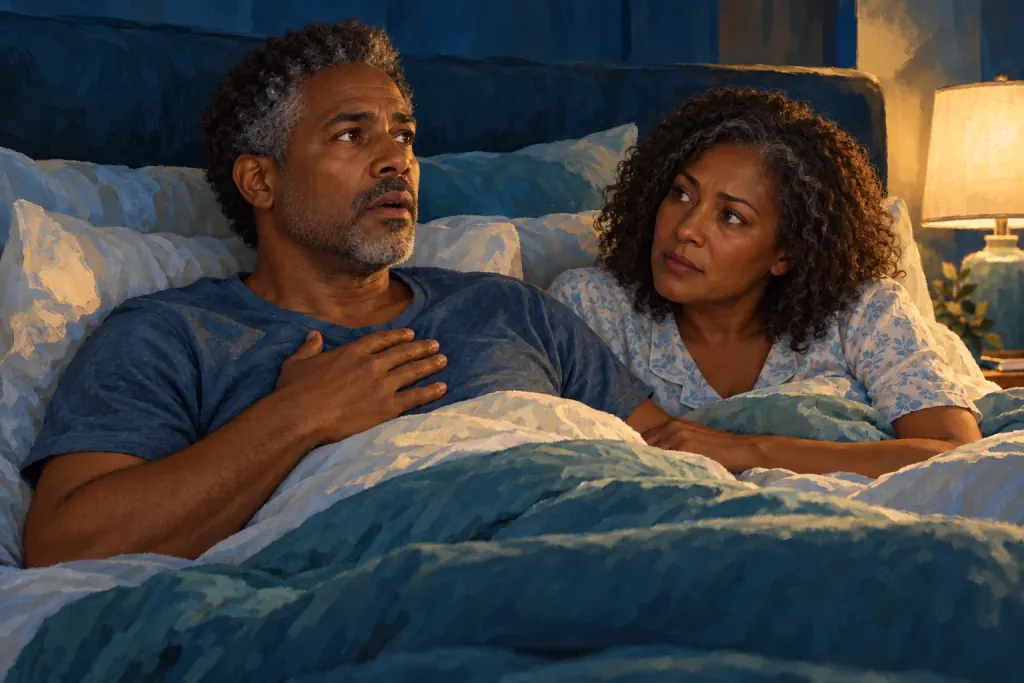
Waking up gasping for air is scary. Once your breathing settles, you're left wondering what happened—and whether it will happen again.
Sleep apnea could be the reason, especially if you also snore loudly, someone has noticed pauses in your breathing, or you feel tired even after a full night's sleep. Gasping alone doesn't tell you the cause, but if it keeps happening, it's worth getting checked.
Why sleep apnea can wake you up gasping
Sleep apnea causes breathing to stop and restart during sleep. The most common type is obstructive sleep apnea, or OSA. It happens when the muscles around your throat relax and your airway becomes too narrow or closes.
As airflow slows or stops, your oxygen level may fall. Your brain senses the breathing problem and briefly wakes you enough to reopen your airway. Breathing may restart with a snort, a gasp, or a choking sound.[1]
Many of these awakenings last only seconds, so you may not remember them. Sometimes you wake fully, trying to catch your breath. Either way, repeated interruptions can leave you feeling worn out the next day.
A less common type, central sleep apnea, involves a problem with the signals that control breathing. The type matters because treatments differ, and symptoms alone can't tell you which one you have.[1:1]
Other signs to watch for
Nighttime gasping is worth mentioning to your doctor, especially alongside:
- Loud, frequent snoring or breathing pauses someone else notices.
- Daytime sleepiness, fatigue, or trouble concentrating.
- Waking with a dry mouth or headache.
- Frequent awakenings or trips to the bathroom.[2]
You don't need every symptom to get checked. If you sleep alone, you may not know whether you snore or stop breathing.
Could it be something else?
Yes. Asthma, other lung conditions, heart problems, and anxiety or panic can also cause breathlessness.[3] Feeling panicked after waking up gasping doesn't necessarily mean anxiety caused it.
Tell your doctor if you also have trouble breathing while awake or lying flat, wheezing, swollen ankles, or symptoms that are getting worse. Those details help them decide what needs investigating.
Call 911 for sudden, severe shortness of breath, or breathlessness with chest pain, fainting, blue lips or nails, or new confusion. Don't wait for a sleep appointment.[3:1]
How do you find out?
Your primary care doctor or a medical sleep specialist can evaluate your symptoms. If they suspect sleep apnea, they may recommend a sleep study at home or in a lab. The results help identify the type and severity of sleep apnea and guide treatment.[4]
Treatment may include CPAP or, for some people with OSA, a custom oral appliance. Worn during sleep, the appliance helps hold your lower jaw forward to keep your airway open. After a physician's diagnosis and prescription, Dr. Ashley DeSaix evaluates whether an appliance suits your teeth and jaw and coordinates care with your medical team.[5]
Not sure where to start?
You don't need to have had a sleep study to reach out. Contact our Raleigh office and we can help you understand the next steps toward a medical sleep evaluation and explain where oral appliance therapy may fit.
Whether you're wondering about your symptoms or already exploring treatment, you're welcome to start the conversation with us.
Mayo Clinic, Sleep apnea: symptoms and causes. ↩ ↩
National Heart, Lung, and Blood Institute, Sleep apnea symptoms. ↩
Mayo Clinic, Shortness of breath: causes and when to seek care. ↩ ↩
National Heart, Lung, and Blood Institute, Sleep apnea diagnosis. ↩
American Academy of Dental Sleep Medicine, Oral appliance therapy. ↩