
Two therapies.
One coordinated plan.
For some patients, an oral appliance and CPAP can work together to support breathing and make treatment easier to use.
Discuss your optionsCombined sleep apnea therapy in Raleigh, NC
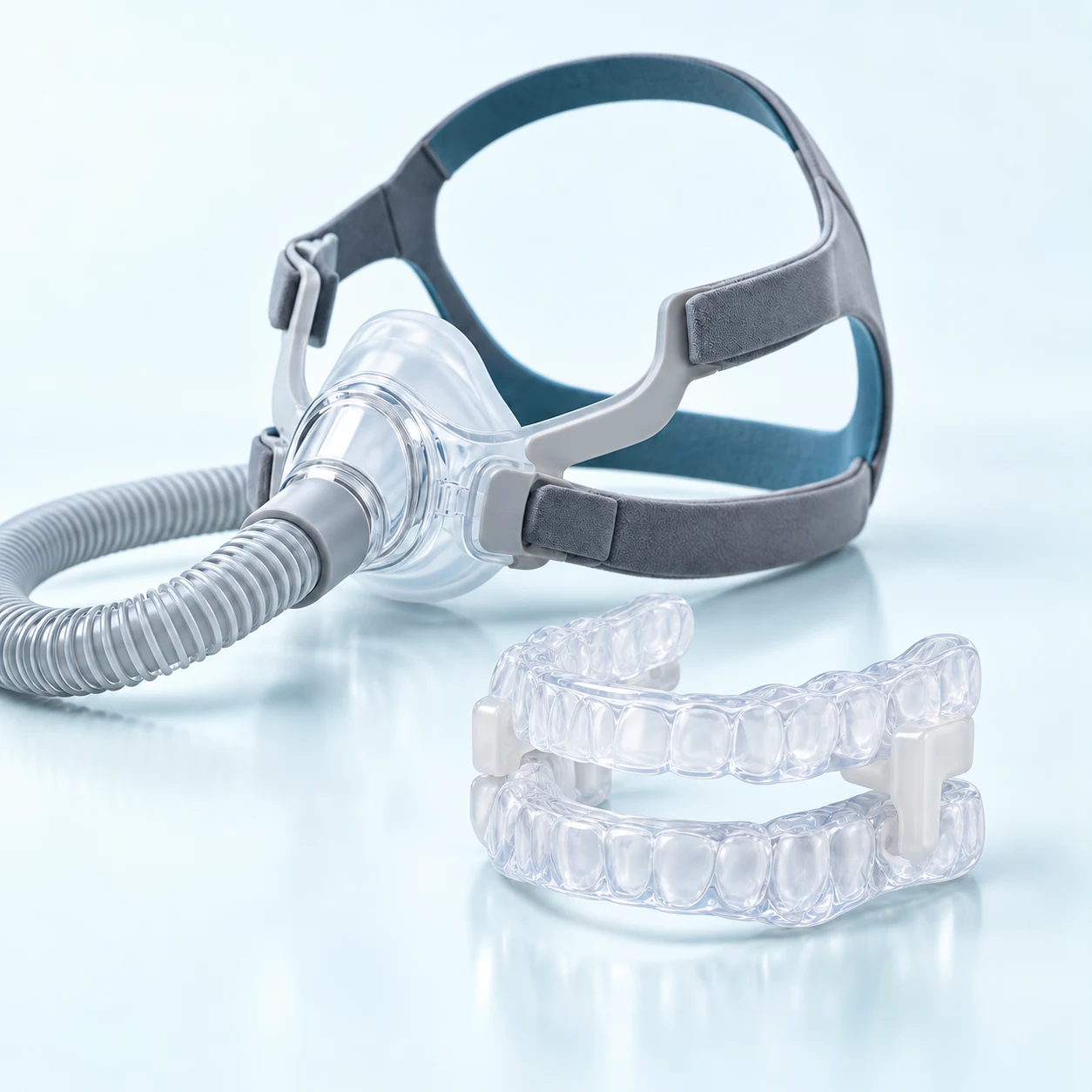
How the therapies
work together
An oral appliance gently supports the jaw forward to help reduce airway collapse. CPAP supplies a steady flow of air to support breathing through the night.
Together, they may reduce airway resistance. Some patients may be able to use lower CPAP pressures, with settings managed by their prescribing clinician.
Support for comfort
and consistency
Combined therapy may be considered when CPAP alone leaves persistent symptoms, pressure feels difficult to tolerate, or higher settings are needed.
For some people with moderate to severe obstructive sleep apnea, it offers a nonsurgical approach that brings two treatments into one care plan.
Is combined therapy
right for you?
Your diagnosis, anatomy, symptoms, and response to treatment all matter. We review your sleep study, current CPAP experience, and goals to discuss whether an appliance could help.
Positional sleep apnea, pressure intolerance, and persistent symptoms are reasons to start a conversation with your care team.
A clear path.
A team beside you.
We help you understand the options and coordinate your next step.
- 1
Review your current treatment
Bring your sleep study and describe your CPAP experience, including comfort and any persistent symptoms.
- 2
Plan together
Your dental sleep team and medical provider consider whether a custom appliance is suitable alongside CPAP.
- 3
Fit, monitor, and follow up
Appliance fitting and adjustments are followed by coordinated assessment of treatment effectiveness.
Good questions.
Clear answers.
Insurance and payment information Does this replace my CPAP?
Combined therapy uses both treatments. Keep using prescribed therapy unless your treating clinician advises a change.
Can I lower the pressure myself?
Discuss pressure changes with the clinician who manages your CPAP. Any adjustment should be part of your coordinated treatment plan.
How do we know it is working?
Follow-up with your dental sleep team and sleep physician helps assess comfort and effectiveness, including efficacy testing when appropriate.
Let’s talk about better sleep.
Bring your questions. We’ll help you understand your next step.