For clinicians: Refer a patient 919-307-8960

How oral appliance
therapy works.

A custom fit. A carefully chosen jaw position. A plan to check the result.

An oral appliance supports your lower jaw forward while you sleep, helping create room for breathing. Here’s what happens—and why the care around the device matters.

See how it works
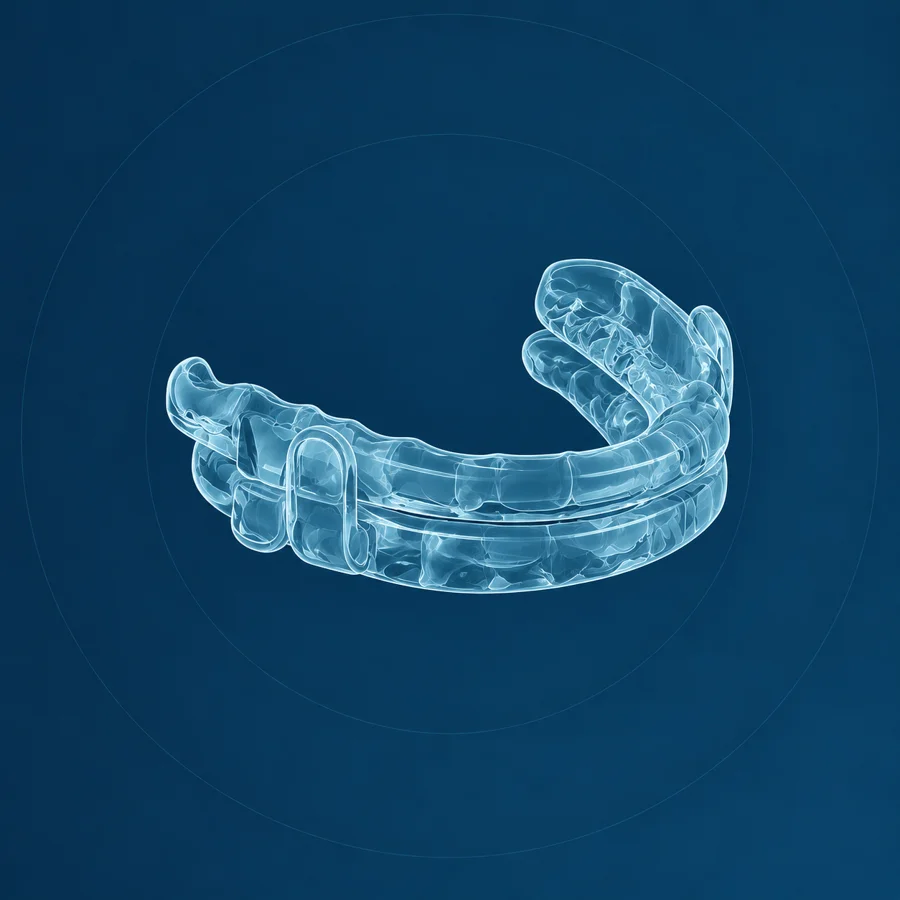
Illustration of a custom oral appliance with separate upper and lower trays
Worn over your teeth while you sleep.Illustration; appliance designs vary.

A small shift.
More room to breathe.

During sleep, the tongue and other soft tissues can narrow or block the upper airway. In obstructive sleep apnea, this repeatedly limits or interrupts breathing. [1]

A mandibular advancement appliance holds the lower jaw in a forward position. This can bring the tongue and connected tissues forward and help keep the airway open. It does not push air into your lungs. [2]

Explore the principle

With an appliance: supporting the lower jaw forward can help reduce airway collapse during sleep.

Simplified concept diagram—not anatomy, a measured jaw setting, or a prediction of your treatment result. The two views illustrate a relationship, not a guaranteed opening of the airway.
respairsleep.comRespAir Sleep
The aim is a stable airway during sleep.

The best setting is individual. Moving the jaw farther forward is not always better; adjustment balances comfort and breathing response. [3]

Made for your teeth.
Adjusted for your sleep.

You may hear the terms oral appliance therapy (OAT) or mandibular advancement device (MAD). Here, we’re describing a custom, adjustable device that fits over both dental arches.

A sports guard or grinding guard has a different purpose. Protecting teeth does not establish that a device treats sleep apnea. Clinical guidance favors a custom, adjustable appliance over a non-custom device when oral appliance therapy is prescribed. [4]

Explore the appliances we provide

A fit built from your bite

Scans or impressions and a bite record guide fabrication. The examination considers your teeth, gums, restorations, jaw joints, and range of movement. [3]

A design selected with you

Dr. DeSaix works with multiple appliance types. Your clinical needs, comfort, preferences, and coverage requirements inform the choice together—not a single device for every patient.

Small, guided adjustments

After delivery, the jaw position is refined over time. Follow the adjustment plan your dental sleep team gives you; appliance mechanisms and individual needs differ. [3]

The right option begins
with your diagnosis.

Your sleep study and health history help your care team decide whether an appliance is appropriate. Snoring by itself cannot tell you whether you have sleep apnea.

Obstructive sleep apnea

An appliance may be considered for adults who cannot tolerate CPAP or prefer another treatment. Severity, oxygen levels, dental health, and treatment response all matter. CPAP generally reduces breathing events and improves oxygen levels more effectively; severe OSA needs particular care in selecting an alternative. [4]

Snoring without sleep apnea

An appliance can also be an option for primary snoring, after a medical evaluation rules out OSA. The pathway starts with understanding the cause, not choosing a device based on the sound of snoring alone. [4]

Explore snoring treatment
Sometimes the plan uses both treatments.

An appliance and PAP may be used together when your care team recommends combined therapy. Read about combined sleep apnea therapy. [3]

Feeling better matters.
Measuring matters, too.

Less snoring or more energy is encouraging, but neither proves that OSA is controlled. Follow-up sleep testing with the appliance helps your medical provider assess effectiveness. [4]

  1. 1

    Review and plan

    Bring your sleep study and current treatment information. Your evaluation connects the sleep diagnosis with your dental health and goals.

  2. 2

    Fit and learn

    Your team checks the appliance fit and teaches you how to insert, remove, clean, and adjust your specific device.

  3. 3

    Refine and test

    Comfort and symptoms guide adjustments. Your medical provider then evaluates the treatment response, including appropriate sleep testing.

  4. 4

    Keep checking in

    Follow-up reviews your bite, teeth, jaw comfort, appliance condition, and symptoms. Changes may call for new testing or a different plan. [3]

A nighttime routine.
Ongoing support.

The device is compact, quiet, and needs no electricity when used on its own. It works while it is worn; it is not a permanent cure. Consistent nightly use and follow-up are part of treatment. [5]

Use the cleaning and storage instructions for your appliance. Keep regular dental care, and let the team know about new dental work or a change in how the appliance fits.

Understand insurance and treatment costs

Know what to report

Possible effects include jaw or tooth soreness, irritation, excess saliva or dry mouth, and changes in the way your teeth meet. Some bite or tooth-position changes can persist. [6]

Tell your dental sleep team about pain, a changing bite, loose dental work, or a damaged appliance. They can evaluate the problem and discuss adjustments or alternatives. Morning exercises or a bite guide may be recommended for your situation. [7]

Before you begin.
A few common questions.

How long does it take to find the right setting?

There is no single timetable. Fit, comfort, the adjustment process, and follow-up testing determine the next steps. Your team will give you a plan rather than a promise of results by a certain date.

Can I stop CPAP when my appliance arrives?

Do not change or stop prescribed therapy on your own. Ask your treating medical provider how to manage treatment while your appliance is being fitted, adjusted, and evaluated.

Will a particular brand work better for me?

A brand name cannot predict your response. Dr. DeSaix helps you select an appropriate appliance and then monitors how you do with it. See the designs available at RespAir Sleep.

Let’s find your
next step toward better sleep.

Bring your questions, your sleep study, or simply your story. We’ll help you understand where to start.

Call 919-307-8960 Request a consultation